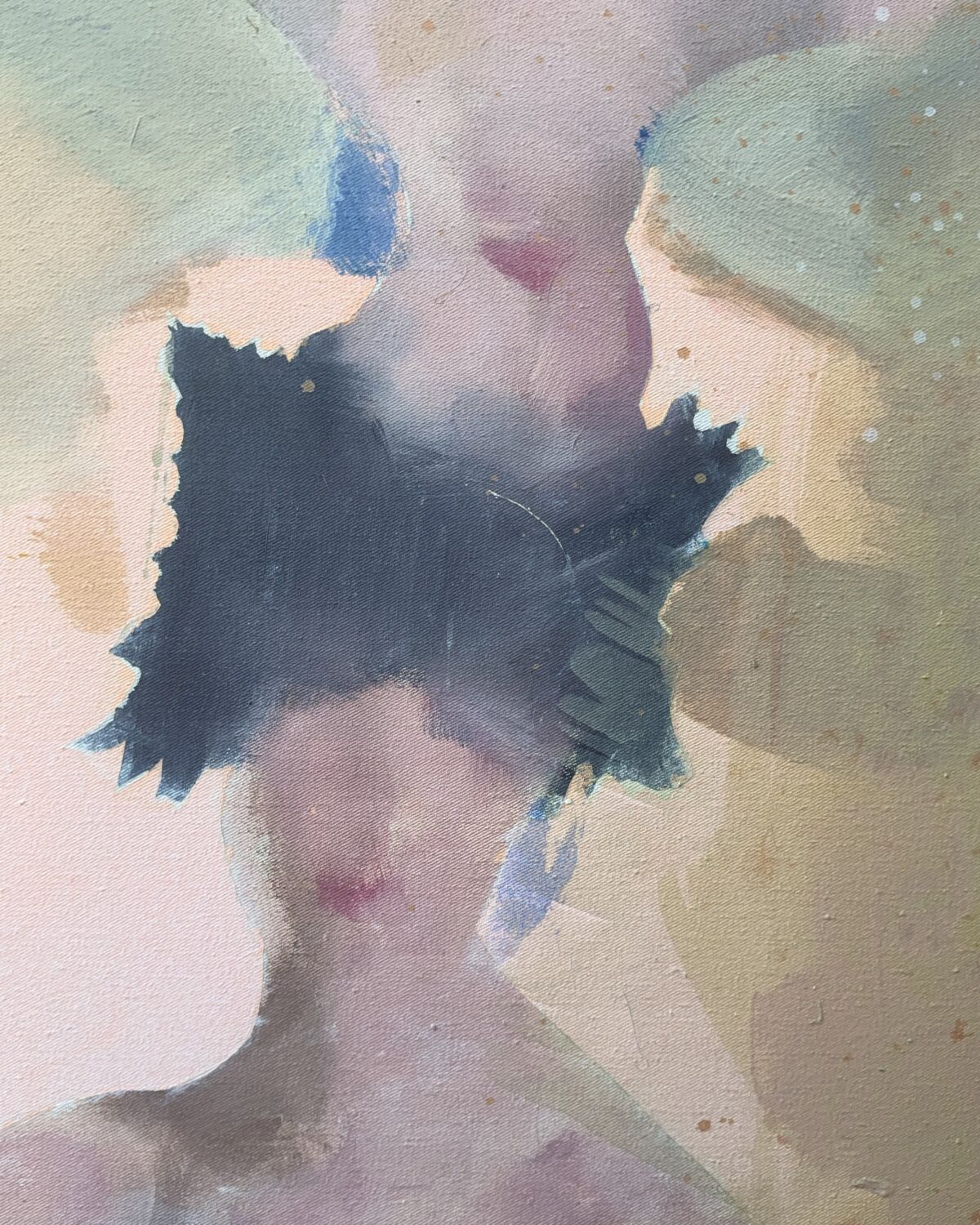
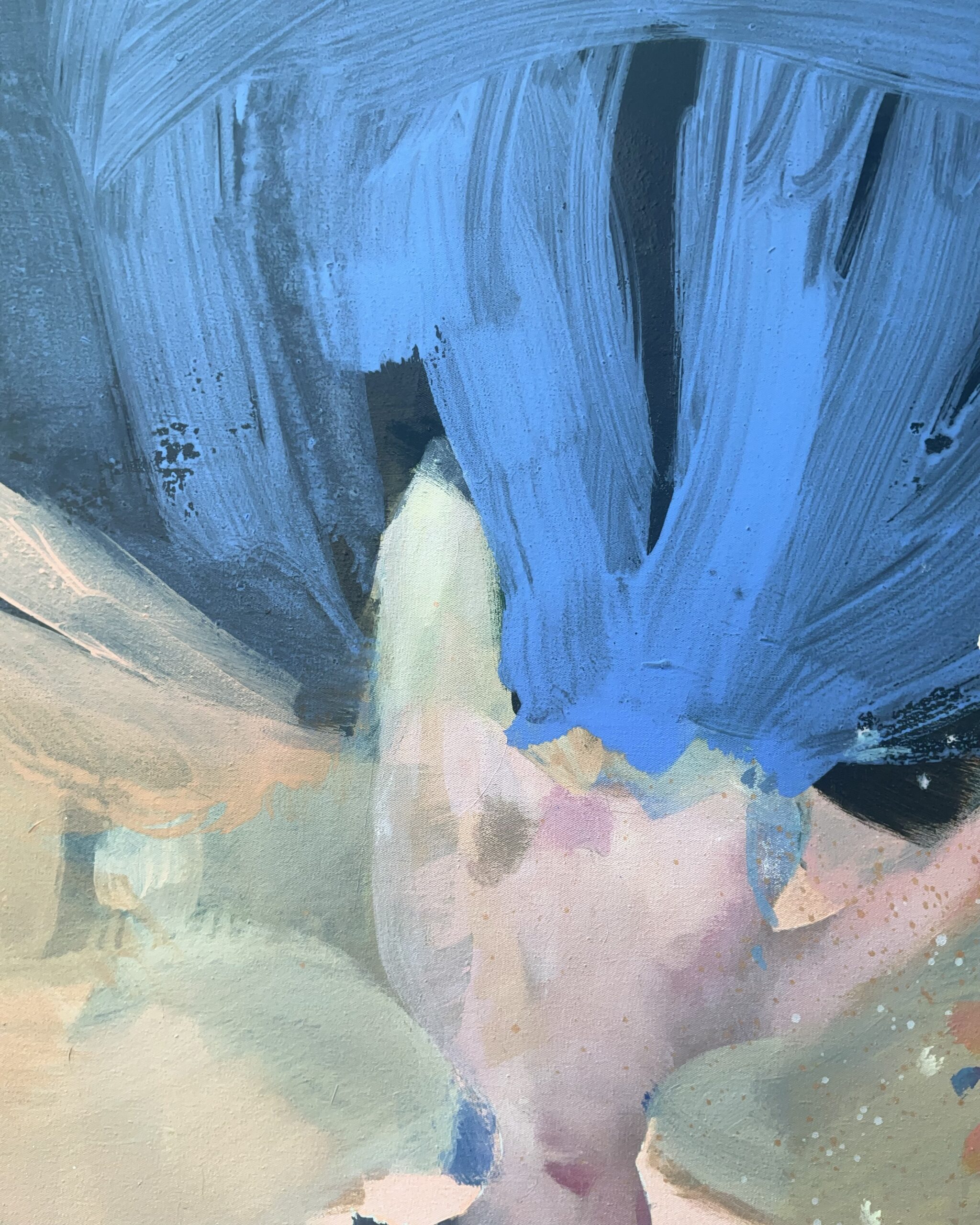
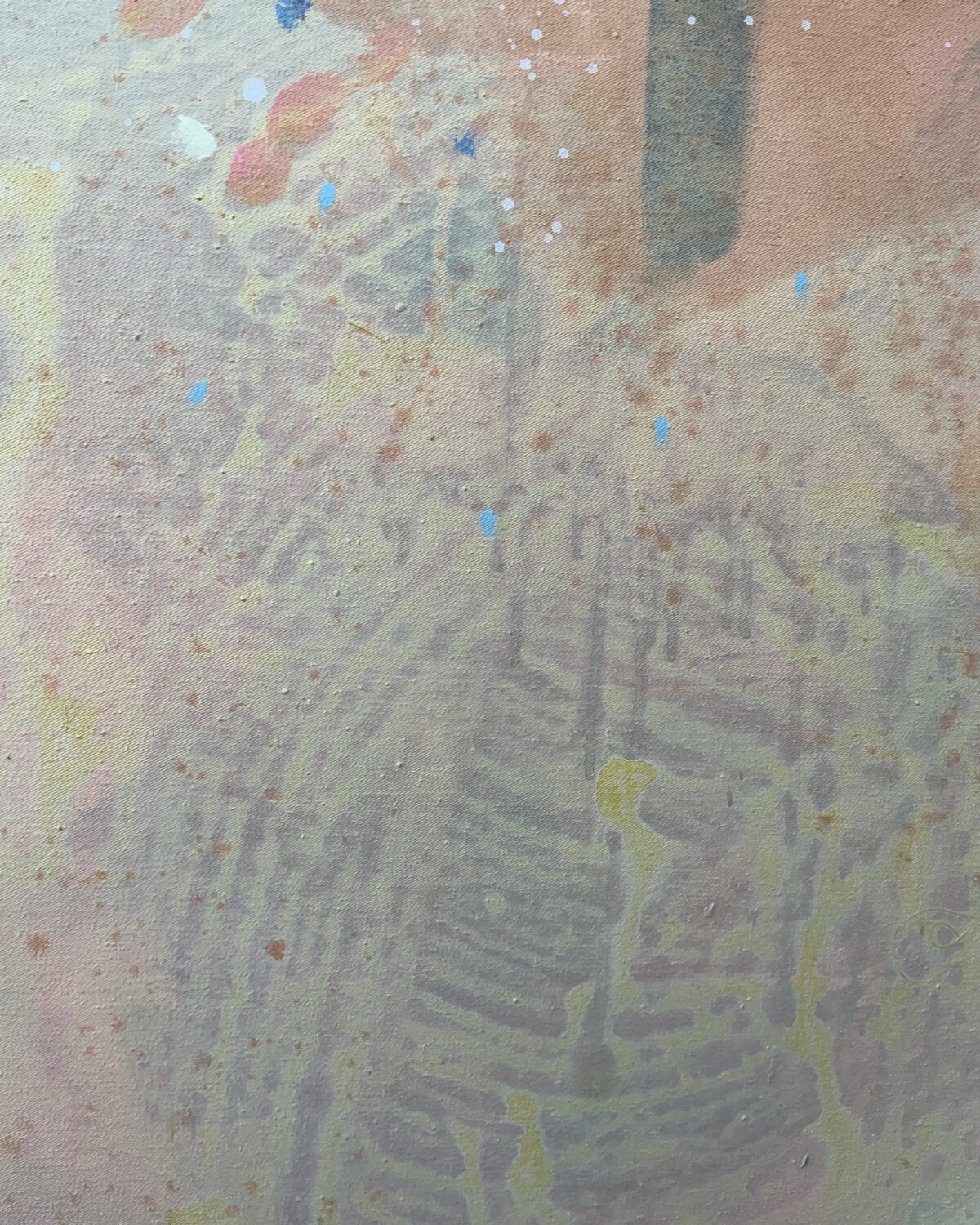
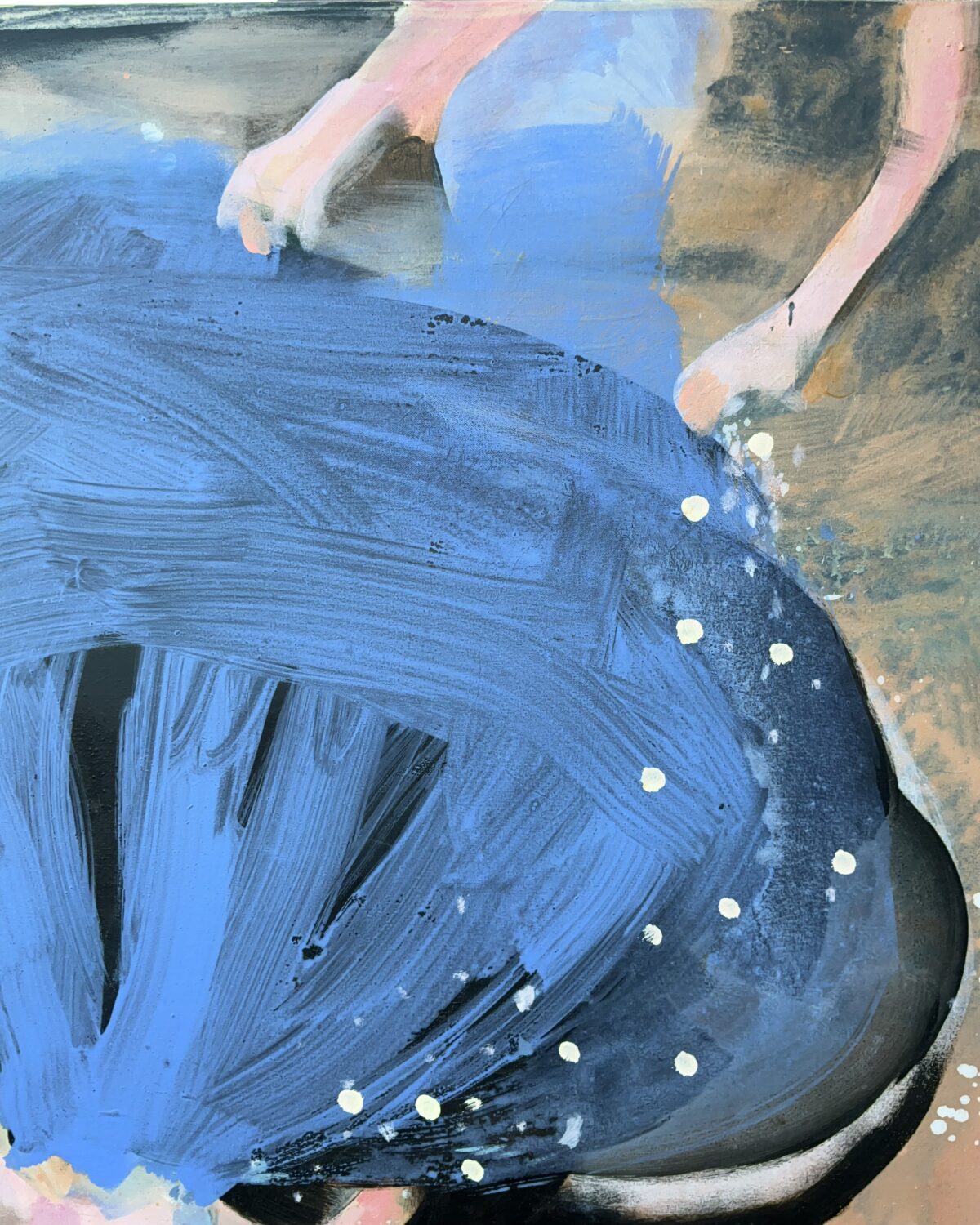
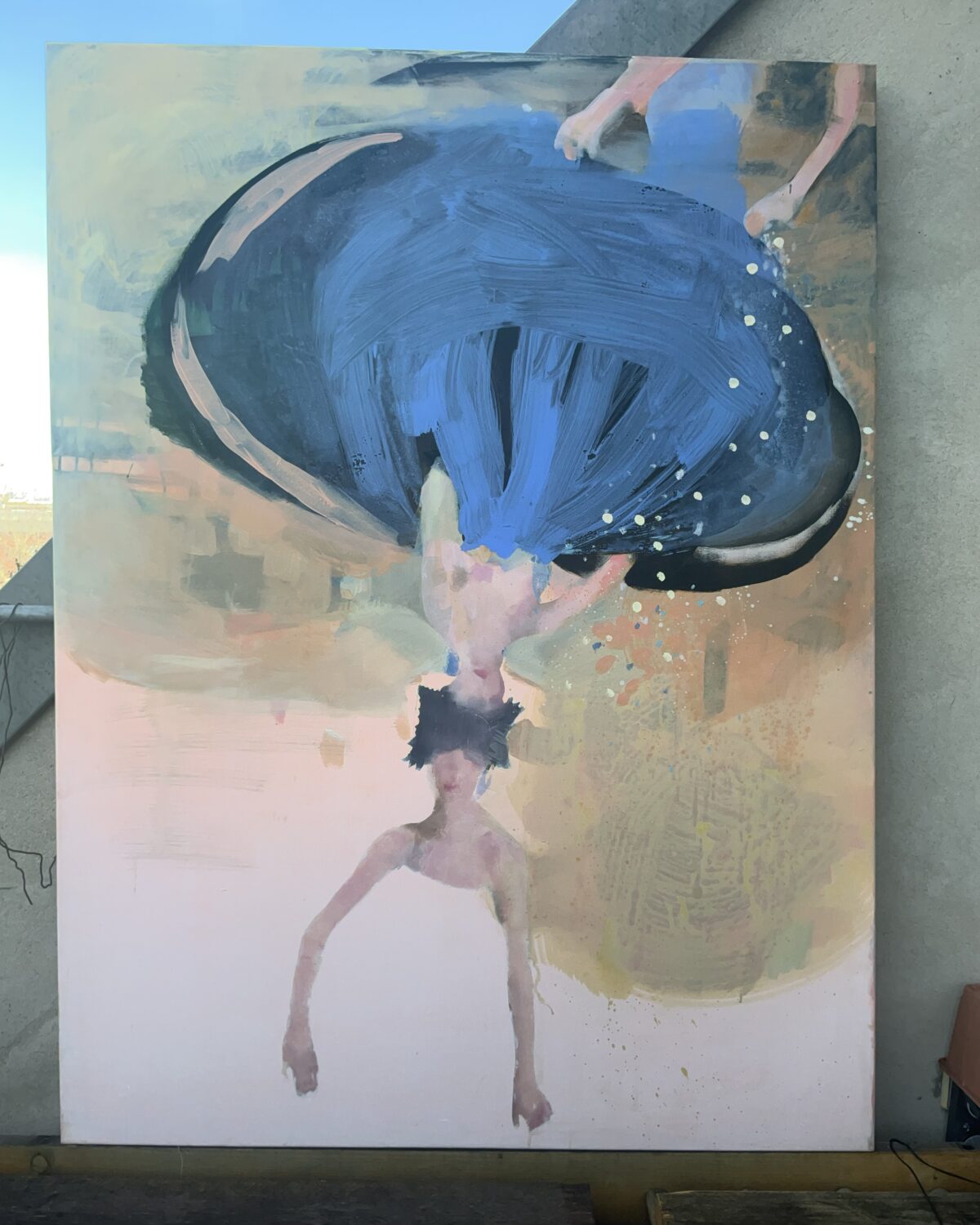
Echo refers here to an internal seriality of the image rather than a series in the conventional sense: a sequence of states unfolding over time on the same support, each leaving its after-effects in the others. The image acts as a resonating body in which earlier gestures are displaced into its depths: painted over, concealed, yet still active. “Echo” thus refers to the persistence of traces under changing conditions rather than the repetition of the same – a return of material and semantic remnants that continue to act as a latent structure in the image’s next state.
Within this logic, reworking becomes a method of retention. Layers produce a densification in which what came before persists as residual inscription: as pressure, abrasion, sediment or a tide line, rather than as an update. Visibility is only one form of its appearance; what matters is the active presence of what has been painted over. The echo lies less in a recognisable motif than in the continuing movement of material, in which making and erasing, opening and closing, stabilisation and drift intertwine.
The dating of pictorial time marks this process as a prolonged inscription: time operates as a procedure within the image rather than as documentary chronology. Meaning remains in motion; forms change their status, figures become unstable and spaces reorganise themselves. The image presents an epistemic situation rather than “development” understood as linear improvement: meaning emerges, shifts, is suspended and returns as a reverberation. Echo is the form through which memory operates as a material state – as a structural after-effect within the material body of the image, rather than as a narrative.
Through layering, what is unseen becomes an active level of the image: a form of negative evidence that holds together material history and shifts in meaning, articulating painting’s processual nature as a form of memory.